

Call us now
08071931979
Portable Appliance Tester PAT450 - Megger

Portable Appliance Tester PAT450 - Megger Specification
- Resistant Feature
- Impact and dust resistant
- Batteries Type
- Rechargeable (internal battery)
- Usage & Applications
- Testing electrical safety of portable appliances
- Accuracy
- 2% of reading
- Product Type
- Portable Appliance Tester
- Material
- High impact plastic
- Measuring Voltage Range
- Test voltages 250 V and 500 V
- Operating Temperature
- 0C to 50C
- Frequency (MHz)
- 50/60 Hz (Mains Frequency)
- Insulation Box
- Yes
- Protection System
- Built-in safety protection circuits
- Size
- Portable
- Color
- Grey & Yellow
- Dimension (L*W*H)
- 270 mm x 250 mm x 140 mm
- Weight
- 3.3 kg
- Test Modes
- Manual and automatic testing
- Power Source
- Mains/rechargeable battery
- Standards Compliance
- IEC 61010, EN 61010-1, IEC 61557
- Insulation Test Voltage
- 250 V, 500 V
- User Interface
- Menu driven with dedicated test buttons
- Leakage Measurement
- 0.1 mA to 19.99 mA
- Printer Support
- In-built printer for test results
- Earth Continuity Test Current
- 200 mA to 25 A selectable
- Display Type
- Large backlit LCD
- Data Transfer
- USB and Bluetooth connectivity
- Memory Capacity
- Up to 10,000 test records
- Languages Supported
- Multiple language support
Portable Appliance Tester PAT450 - Megger Trade Information
- Minimum Order Quantity
- 1 Piece
- Supply Ability
- 100 Pieces Per Month
- Delivery Time
- 2 Days
- Packaging Details
- Cartoon
- Main Domestic Market
- All India
Portable Appliance Tester PAT450 - Megger About
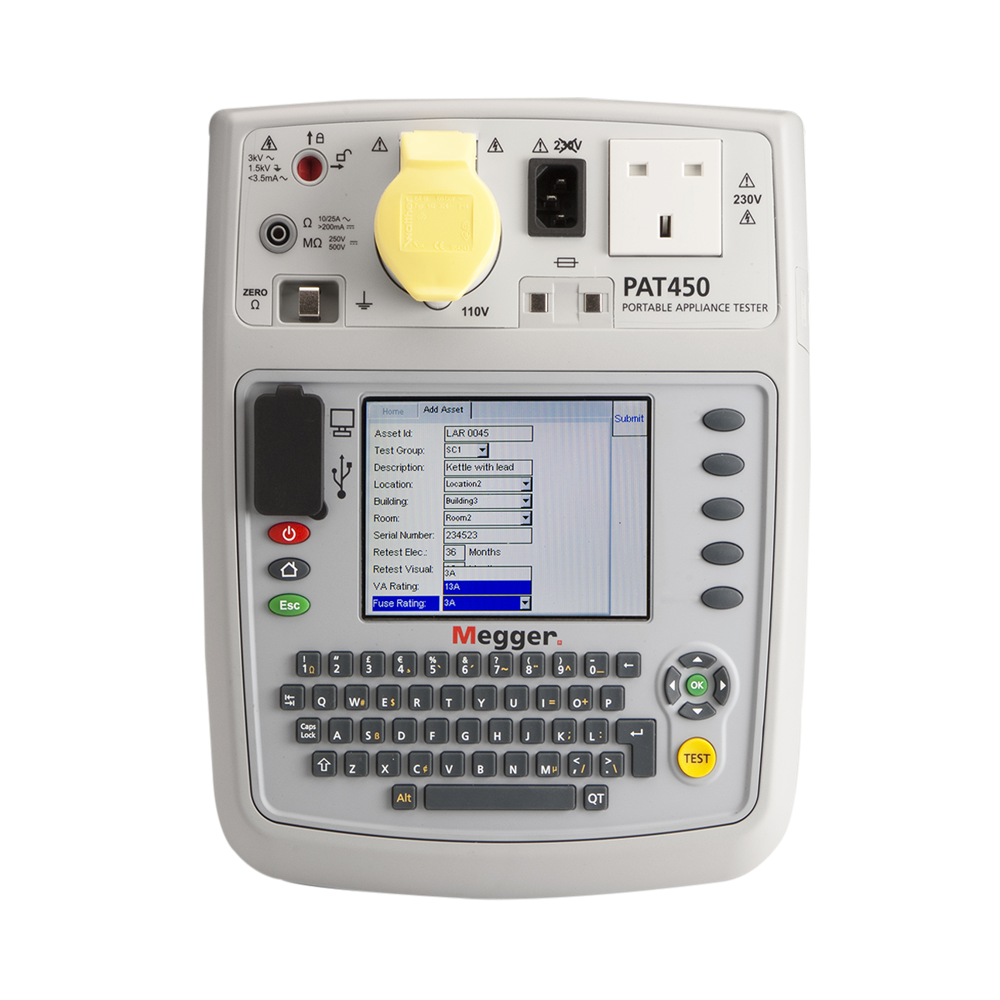
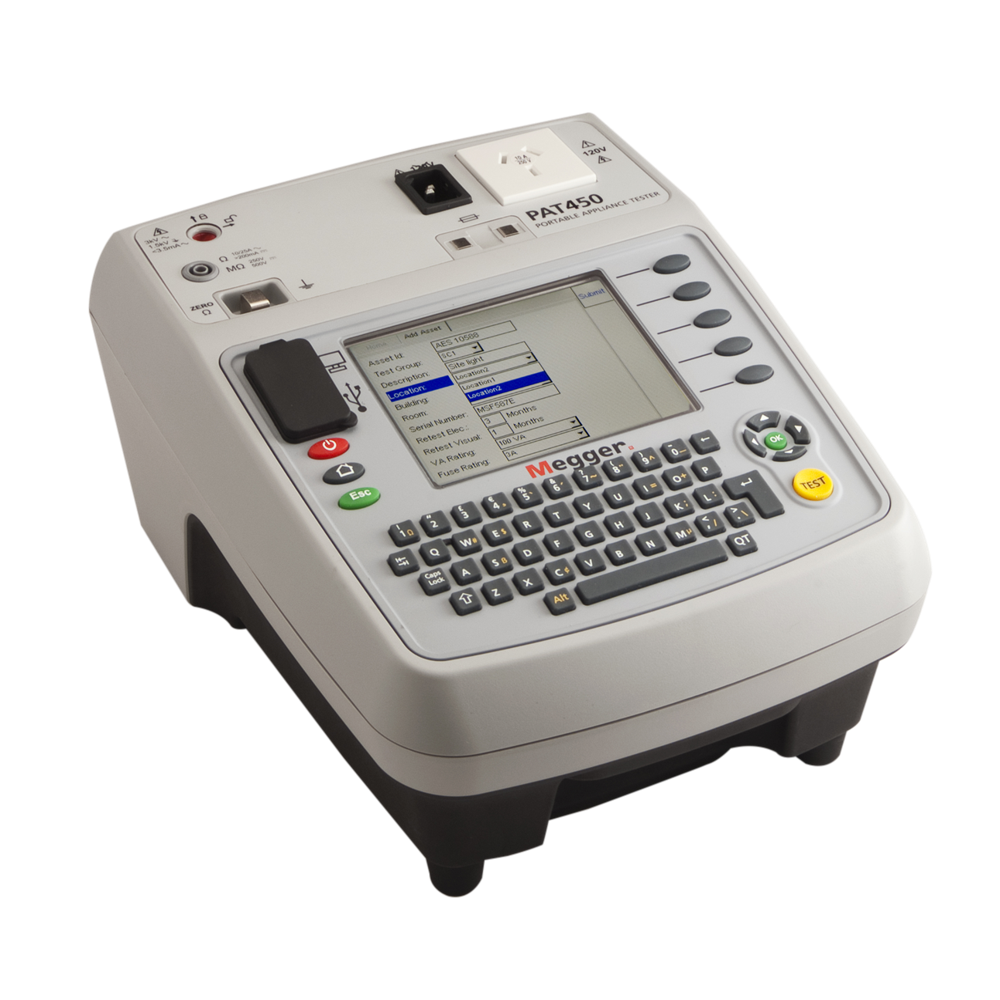
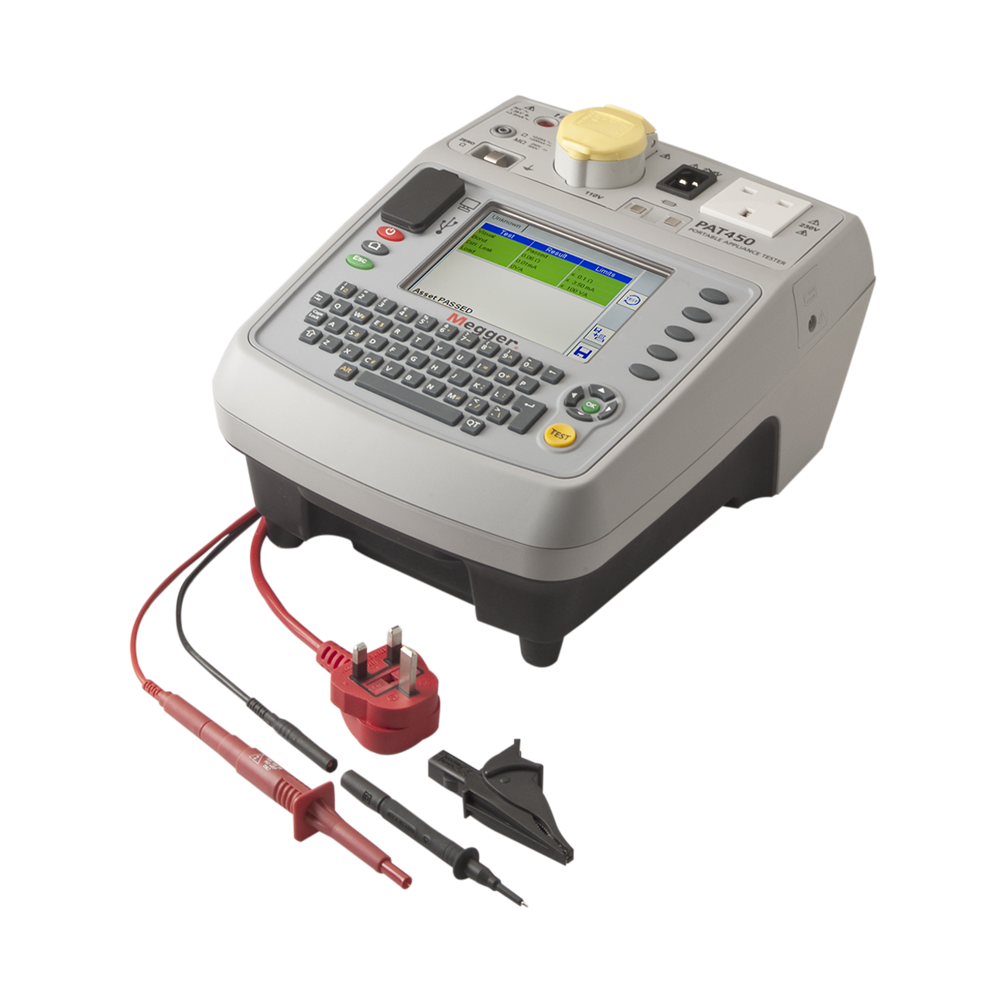
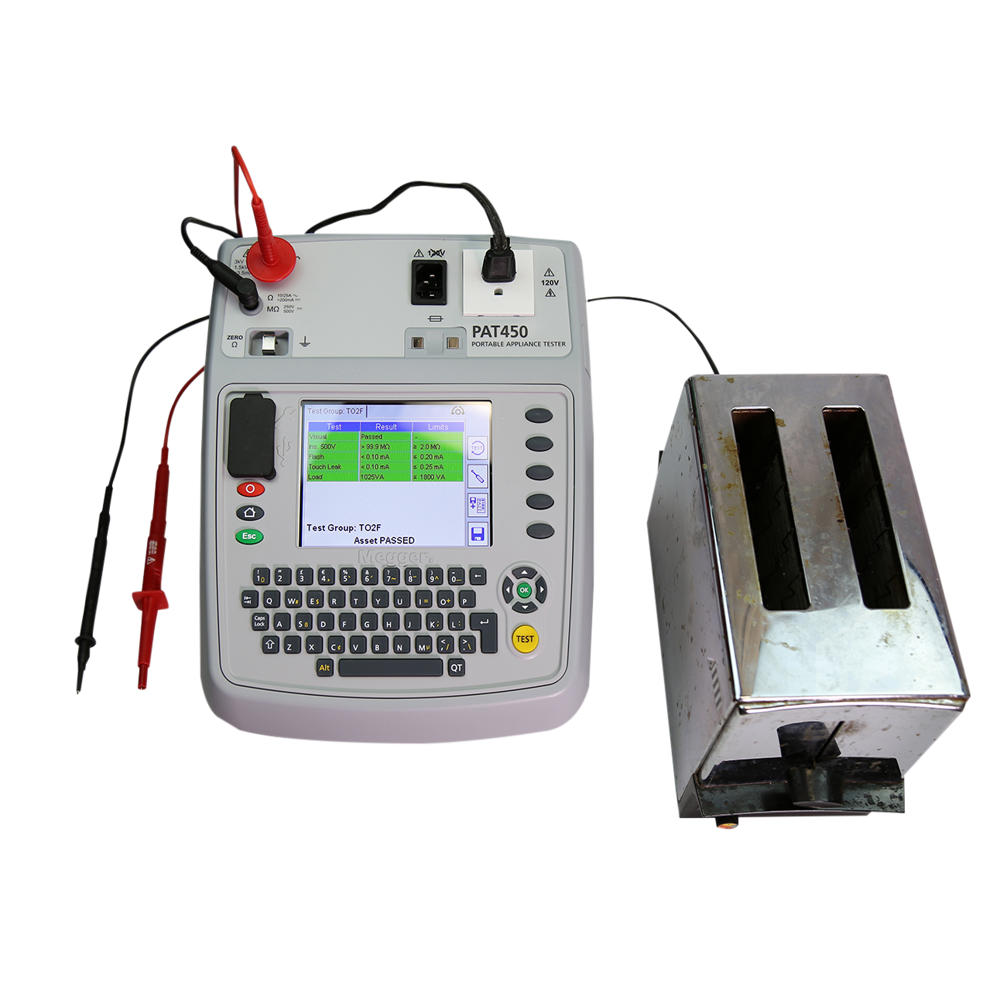
Easy to use, light to carry, and featuring a convenient internal database for results storage, the PAT450 portable appliance tester is optimised for use by service organisations and equipment rental companies. Key benefits of the instrument include rapid start-up, instant restart after temporary disconnection when moving between test locations, and optional barcode support to aid in rapid asset identification.These instruments offer both manual and automatic operation. When used in automatic mode, the test structure can readily be configured to suit specific requirements. This way, for example, a supervisor can predefine a test structure for a particular application and then be sure that all tests are performed exactly as required, irrespective of who carries out the testing work.
The efficient handling of test results is another important characteristic of these innovative instruments. They have an integral multi-user database with ten times the capacity of a typical downloading PAT tester. They use a flat data structure that enhances traceability and makes it easy to set up assets and find their associated data. Results can also be stored in test groups, and there is no limit to the length of the group names. These can be made descriptive and easy to understand, which is an important aid to testing efficiency.
Efficient Data Management
The PAT450 offers a generous memory capacity, storing up to 10,000 test records. Results can be transferred via USB or Bluetooth or printed instantly with its in-built printer. This streamlines data collection and reporting for large-scale operations.
Advanced Safety and Compliance
Engineered for compliance with IEC 61010, EN 61010-1, and IEC 61557, the PAT450 assures users of maximum safety and consistent, reliable performance during electrical safety testing. Its built-in safety circuits further enhance operational safety.
User-Friendly Operation
The menu-driven interface, large backlit display, and multilingual support make the PAT450 easy to navigate for operators of varying skill levels. Dedicated test buttons and selectable test parameters allow for tailored testing in diverse applications.
FAQ's of Portable Appliance Tester PAT450 - Megger:
Q: How can I transfer test data from the Megger PAT450 to a computer or mobile device?
A: The PAT450 supports both USB and Bluetooth connectivity for seamless data transfer. You can easily export up to 10,000 saved test records directly to a compatible device, enabling efficient record keeping and analysis.Q: What is the process for performing an insulation test with the PAT450?
A: Simply select the insulation test mode using the menu-driven interface, choose your test voltage (either 250 V or 500 V), and initiate the test with the dedicated button. Results are displayed instantly on the large backlit LCD and can also be printed.Q: Where is the PAT450 typically used?
A: The PAT450 is commonly used by professionals in industrial, commercial, and institutional environments across India for the electrical safety testing of portable appliances, ensuring they are safe for use.Q: What are the benefits of using the in-built printer on the PAT450?
A: The built-in printer allows immediate documentation of test results, reducing paperwork and facilitating on-site compliance reporting. This is especially beneficial when rapid certification of appliances is required.Q: When should the PAT450 be recalibrated or serviced?
A: It is recommended to have the PAT450 calibrated annually, or as required by your organization's compliance standards, to maintain accuracy and continue meeting safety regulations.Q: How does the PAT450 ensure operator and equipment safety during testing?
A: The tester is designed with built-in safety protection circuits and constructed from high impact plastic. It complies with international safety standards, reducing risks during usage.Q: What makes the PAT450 suitable for use in different environments?
A: Its impact- and dust-resistant casing, portability at 3.3 kg, and wide operating temperature range (0C to 50C) make it highly adaptable to both indoor and outdoor testing scenarios.Tell us about your requirement

Price:
Quantity
Select Unit
- 50
- 100
- 200
- 250
- 500
- 1000+
Additional detail
Mobile number
Email

More Products in Electrical Test And Measuring Instrument Category
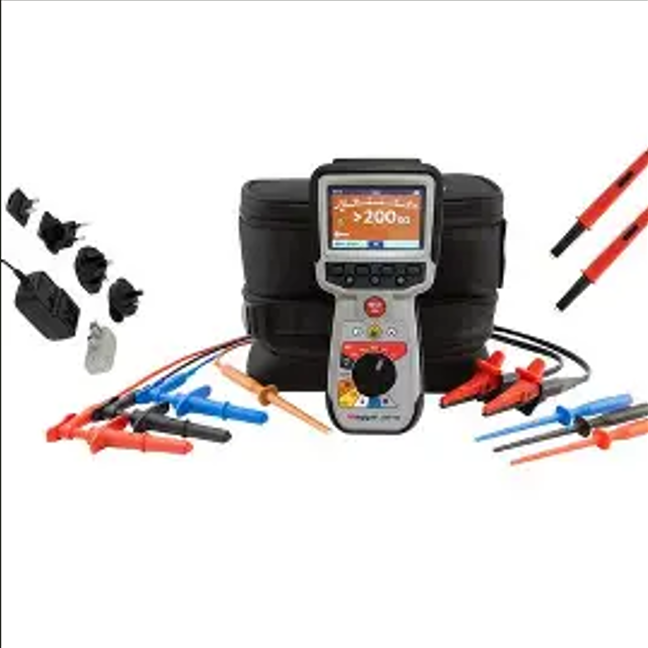
EVT100 Electric vehicle tester
Price 240000.0 INR / Piece
Minimum Order Quantity : 1 Piece
Product Type : Electric Vehicle Tester
Material : Industrial Grade ABS Body
Size : Standard
Color : Black & Blue
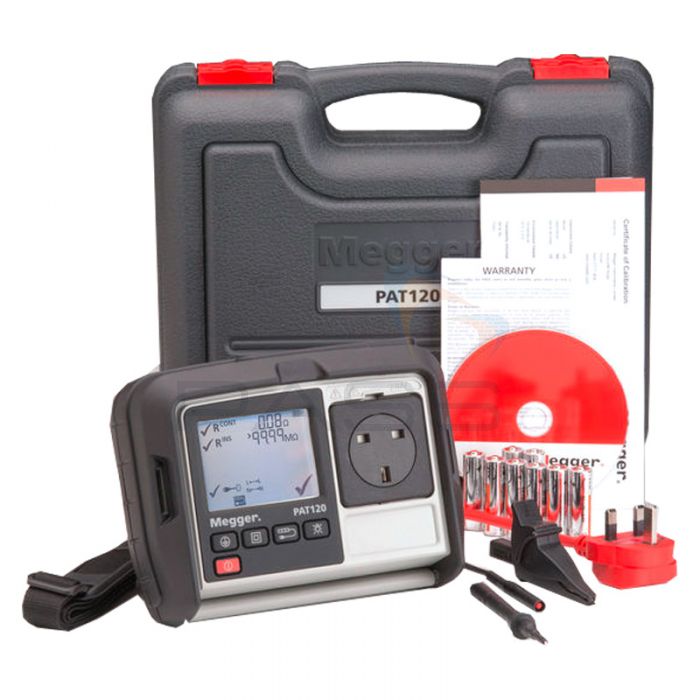
Handheld portable appliance testers PAT100 series
Price 130000.0 INR / Piece
Minimum Order Quantity : 1 Piece
Product Type : Handheld Portable Appliance Tester
Material : ABS Plastic, Electronic Components
Size : Compact handheld
Color : Grey with Blue accents
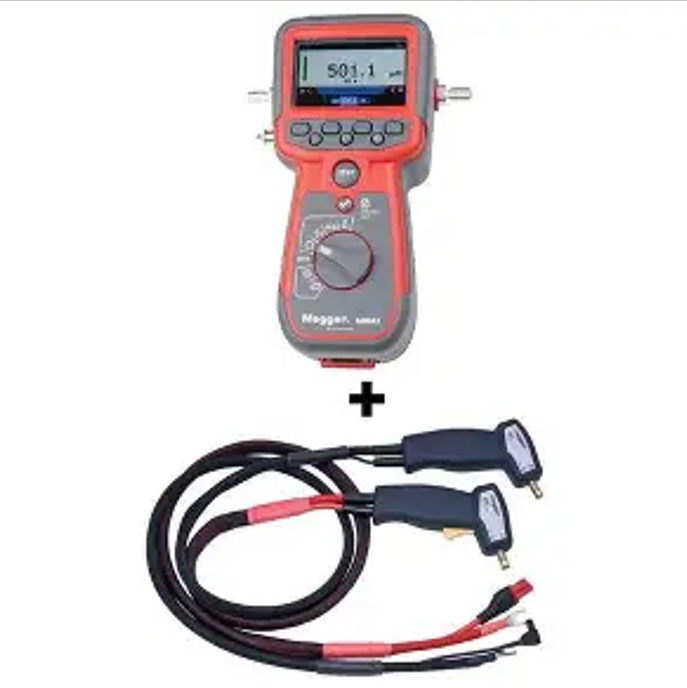
Handheld micro-ohmmeter MOM3
Price 145000.0 INR / Piece
Minimum Order Quantity : 1 Piece
Product Type : Handheld MicroOhmmeter
Material : Rugged ABS plastic housing
Size : Compact handheld design
Color : Blue and black
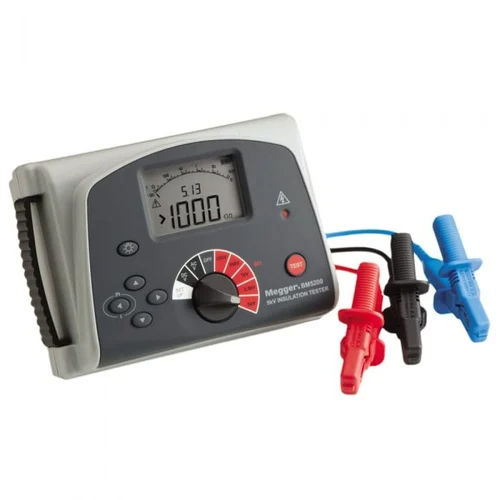
5KV Insulation resistance Tester Bm5500
Price 74920.0 INR / Piece
Minimum Order Quantity : 1 Piece
Product Type : BM55005KV Insulation Tester
Material : ABS
Size : Standerd
Color : Black

Adiradh Energy Pvt Ltd
GST : 36AASCA0235C1Z0
GST : 36AASCA0235C1Z0
15-29-887/C2, Road No.2, KPHB Colony, Kukatpally,Hyderabad - 500072, Telangana, India
Phone :08071931979
 Send Inquiry
- TRANSFORMER AND SUBSTATION TESTING PRODUCTS
- Transformer And Substation Testing Products
- Cable Fault Location And High Voltage Test System
- Power Protection And Switchgear Test Equipment
- Electrical Safety And Transmission Line Test
- Thermal Imaging And Temperature Measurement
- Motor And Generator Testing Equipment
- Insulation Resistance Tester
- Partial Discharge
- Battery Testing Instrument
- Laser Distance Meter
- Environmental Tester
- Distance Meter
- Thermal Imaging Camera
- Digital Clamp Meter
- Transmission Line And Tower Inspection Products
- Insulation Tester
- Omron Products
- Bosch Distance Meter
- Electrical Test And Measuring Instrument
 Send Inquiry
 Send SMS
Adiradh Energy Pvt Ltd
All Rights Reserved.(Terms of Use)
Developed and Managed by Infocom Network Private Limited.
Developed and Managed by Infocom Network Private Limited.

